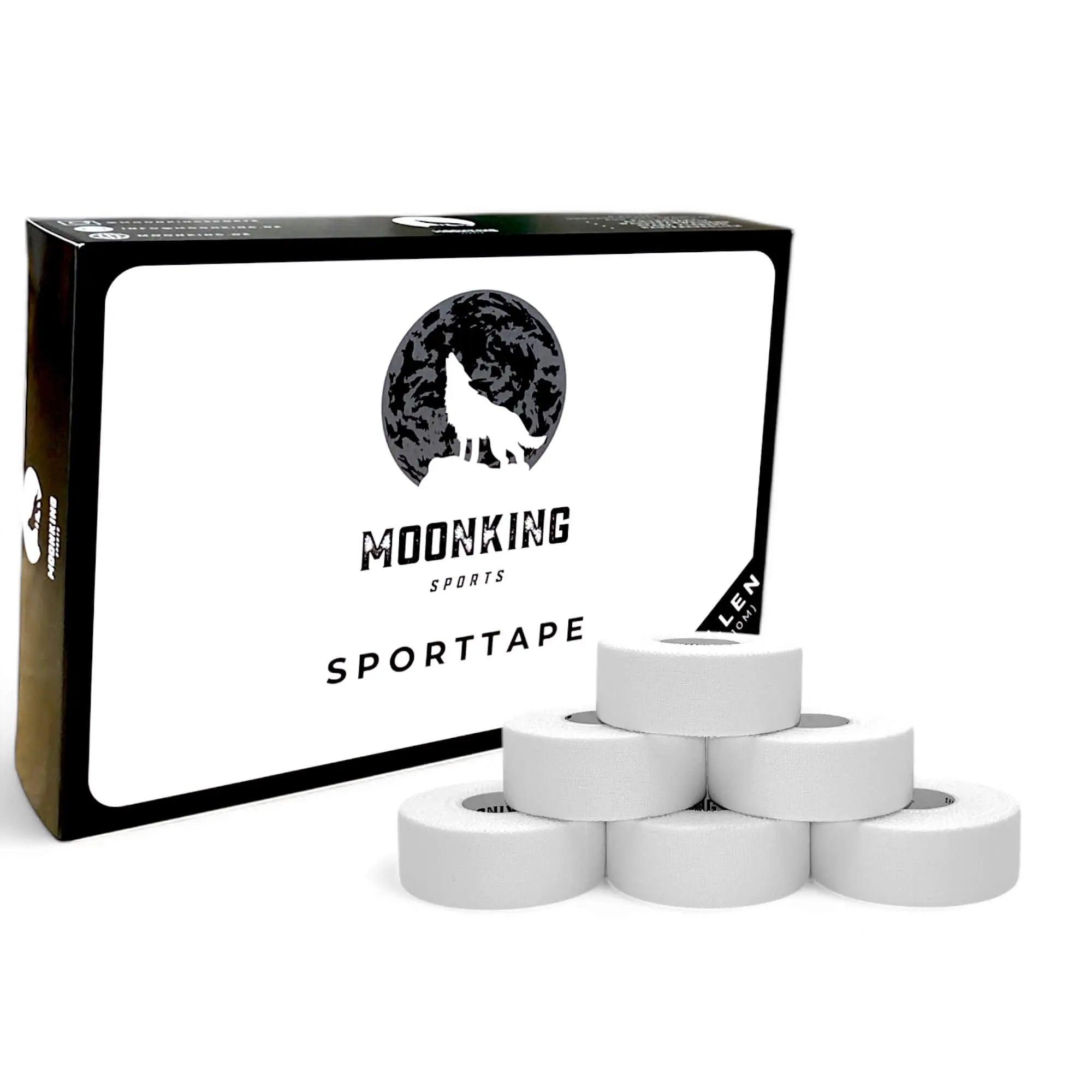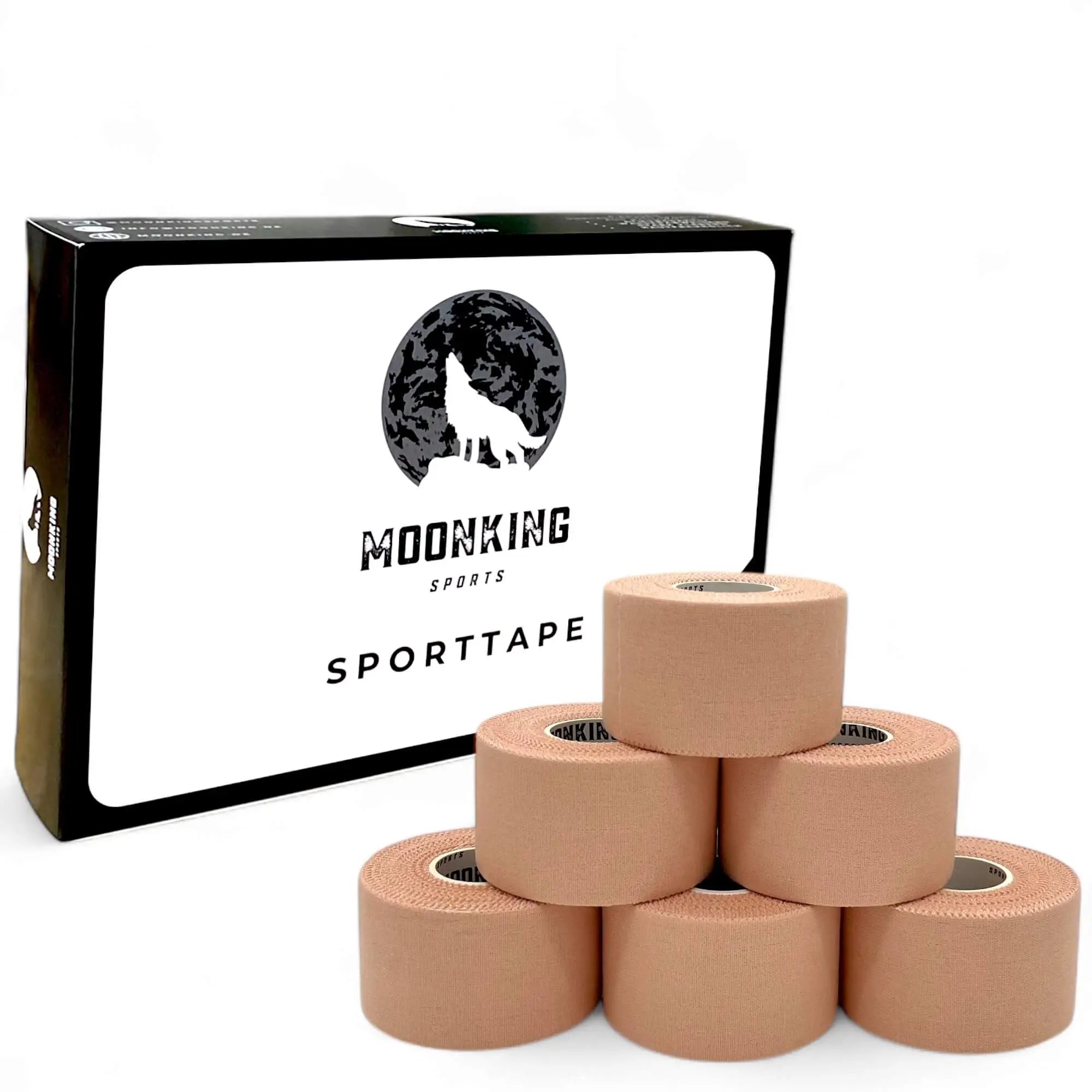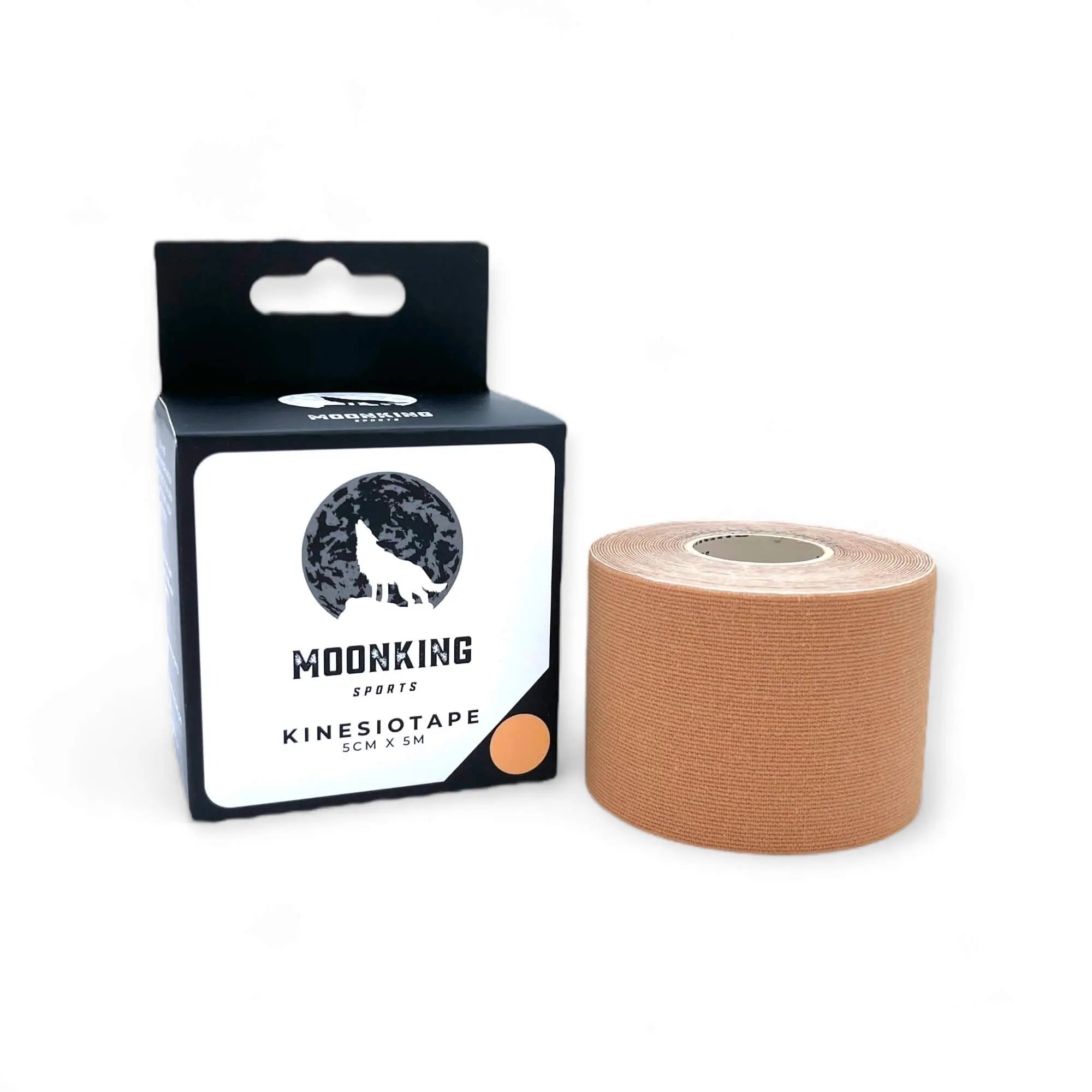




Whether in gymnastics, bouldering, volleyball, basketball, weight training, or martial arts: finger injuries are among the most common "minor" problems that can really slow you down during training. That is exactly why so many people search for "taping fingers", "taping a finger capsule tear", or "taping a sprained finger". In this guide, we will show you the best taping techniques (buddy taping, spiral taping, fixation), when which method makes sense, and which tape you need for it.
Quick guide (30 seconds): For a minor sprain or bruise, buddy taping is usually the fastest solution. For instability in the joint, spiral taping provides additional help. For more severe discomfort: fix the joint more specifically – and if in doubt, have it checked by a doctor.
- Best for: Sprains, bruises, capsule/ligament strains, a "wobbly" feeling in the joint
- Important: Tape should stabilize, but not constrict (tingling/discoloration = loosen or remove immediately)
- You need: Finger tape or sports tape + optionally underwrap
Quick jump to: Buddy Taping · Capsule Tear / Capsule Injury · Sprain · Knuckle/Middle Joint · Which products? · FAQ
We at MoonKing Sports know how crucial the right support is – especially for athletes, active individuals, or anyone who cannot do without a fully functional hand in everyday life. With targeted taping techniques and the right material, you can stabilize your joint, reduce pain, and avoid further irritation – without immobilizing the finger completely.

When is finger taping useful?
Finger taping is not just a measure to take right after an injury, but also useful prevention – especially for sports involving ball contact, grip strain, or a risk of falling.
- Sprains or bruises
- Capsule or ligament strain (e.g., after "jamming" a finger)
- Overuse due to repetitive movements (grip/support)
- Instability following a previous injury
- Protection during training or competition
Typical symptoms where taping can help
- Swelling and pressure pain
- Restricted mobility
- Uncertainty or a "wobbly" feeling in the joint
- Pulling pain under strain
With the right tape, you stabilize the joint, protect it against further irritation, and create good conditions for recovery.
Why taping is often better than just resting
Many tend to completely immobilize injured fingers. The problem: lack of movement can lead to stiffness and delay the return to training. Taping allows for controlled movement while simultaneously providing protection and guidance – a good middle ground, especially for mild to moderate injuries.
Taping fingers for a capsule tear / capsule injury
Many search queries revolve around "taping a finger capsule tear" or "taping a finger capsule injury". Important: A real capsule tear can be more severe than it feels. If you have severe swelling, clear deformity, or intense pressure pain, have it checked by a doctor.
- Mild to moderate: Buddy taping + optional spiral taping (stability + movement)
- Severe/unstable: Joint fixation (more support), adjust training
Recommendation: For sports & gymnastics, finger tape is pleasantly narrow; for maximum support, use sports tape. If you have sensitive skin, use underwrap as a base layer.
Taping a sprained finger: How to proceed
For a sprain, the goal is: protection against overextension – while still maintaining sufficient movement. This works most often with buddy taping (fast) or spiral taping (more targeted).
- Days 1–3: more stable (buddy + fixation if necessary for daily life/training)
- from Day 3–7: controlled movement, tape mainly during strain
Taping the knuckle / middle joint
Search terms like "taping a knuckle" or "taping a finger joint" usually mean: the joint feels "loose" or hurts under pressure/grip. Spiral taping works very well here because it guides the joint without blocking it completely.
The best taping techniques
1) Buddy Taping – the fastest & most effective method
In buddy taping, the injured finger is taped to a healthy neighboring finger (e.g., little finger to ring finger). This is fast, effective, and especially suitable for minor injuries or for prevention.
Advantages:
- easy to implement
- supports natural movement
- reduces strain on the injured joint
How it works:
- Bring the finger into a neutral, slightly bent position.
- A thin strip of tape above the middle finger joints.
- Another strip below the joints.
- Important: Do not tape over the joints themselves completely.
MoonKing tip: Use finger tape for everyday use/comfort or sports tape for maximum support during training.
2) Spiral Taping – targeted support with movement
Spiral taping is ideal if you want to stabilize but keep mobility – e.g., for gymnastics, climbing, or martial arts.
- Start with the tape below the finger (palm side).
- Guide it diagonally over the affected joint.
- Repeat the spiral 1–2 times.
- The tape should be firm but not constricting.
✅ Ideal for: Overuse, prevention, and light training
3) Joint Fixation – maximum support for stronger complaints
If the finger is unstable or you are in the rehab phase, you often need more stability.
- Fix the knuckle with a tight ring of tape.
- Reinforce additionally above and below the middle joint.
- Combine with buddy taping if necessary.
MoonKing recommendation: Use non-elastic sports tape for firm support and long wear.
4) Kinesiology Taping – functional support (after acute phase)
Kinesiology tape is elastic and is particularly suitable after the acute phase, when you want to support movements and relieve irritated conditions.
- Place tape with light tension along the outer edge of the finger.
- Lead it over the joint and fix it on the palm.
- Add a second strip if necessary.

Which products do you really need?
Our main recommendation for fingers: Finger Tape (2.5 cm)
Narrow enough for the little finger, ring finger, and knuckle – ideal for buddy taping and spiral taping. Available in 3-packs or 6-packs.
Supplementary, as needed:
- Maximum support during training: Sports tape
- Sensitive skin / lots of sweat: Underwrap underneath
- Functional support: Kinesiology tape
Here you can find the complete range: MoonKing Tapes & Supports
How often and how long should you tape your fingers?
| Type of injury | Duration of taping | Application |
| Minor bruise | 3–5 days | especially during sports |
| Capsule/ligament strain | 1–2 weeks | Training & daily life (as needed) |
| Rehab phase | 2–3 weeks | after medical consultation |
Important: Change the tape regularly so the skin can recover. In case of itching/redness, take a break or switch to underwrap/kinesiology tape.
Tips for perfect taping
- Clean & dry hands beforehand (better adhesion)
- No wrinkles in the tape (avoids pressure points)
- Do not wrap too tightly (blood circulation must be maintained)
- Test mobility after taping
When should you rather see a doctor or physio?
- Clear deformity or very severe pain
- Numbness/tingling, cold finger, severe discoloration
- Pain/swelling remains the same or gets worse after 5–7 days
FAQ: Finger taping
Which tape is suitable for the little finger?
For the little finger, a narrow, non-elastic tape with a width of about 2–2.5 cm is best – for example, our finger tape (2.5 cm). It can be wrapped neatly around the narrow finger digit and is ideal for buddy taping on the ring finger. Wider sports tape often feels too thick on the little finger.
How long to tape a finger for a capsule injury?
Often 1–2 weeks during strain – depending on pain and stability. In everyday life, only when necessary, so the skin gets breaks.
Can you train with taped fingers?
With minor complaints, often yes – but adjust the load. In case of instability, severe pain, or uncertain diagnosis, it is better to have it checked.
Which tape for fingers: Finger tape or sports tape?
Finger tape is narrow and comfortable. Sports tape provides maximum support (training/competition). For sensitive skin: Underwrap underneath.
Conclusion: Finger taping – small, but crucial
Whether it's the little finger, ring finger, or knuckle: when taped correctly, you can gain stability, reduce pain, and train more safely. With the right techniques (buddy, spiral, fixation) and high-quality tape from our shop, you'll be back in action in no time.
Discover now: Tape & Supports · Finger tape · Underwrap
Note: This article does not replace medical advice. In case of severe pain, persistent swelling, or an uncertain diagnosis, we strongly recommend a visit to a doctor/physio.