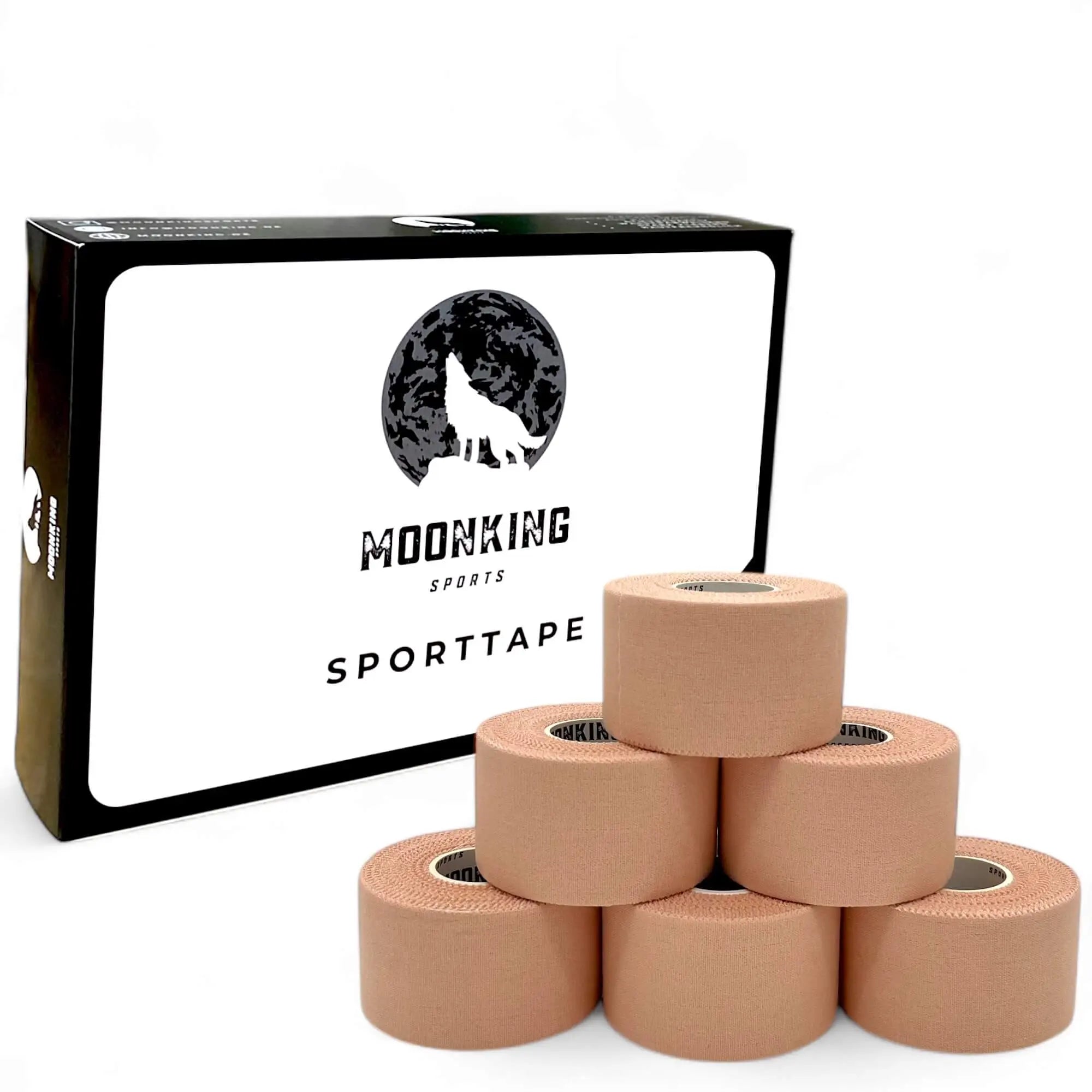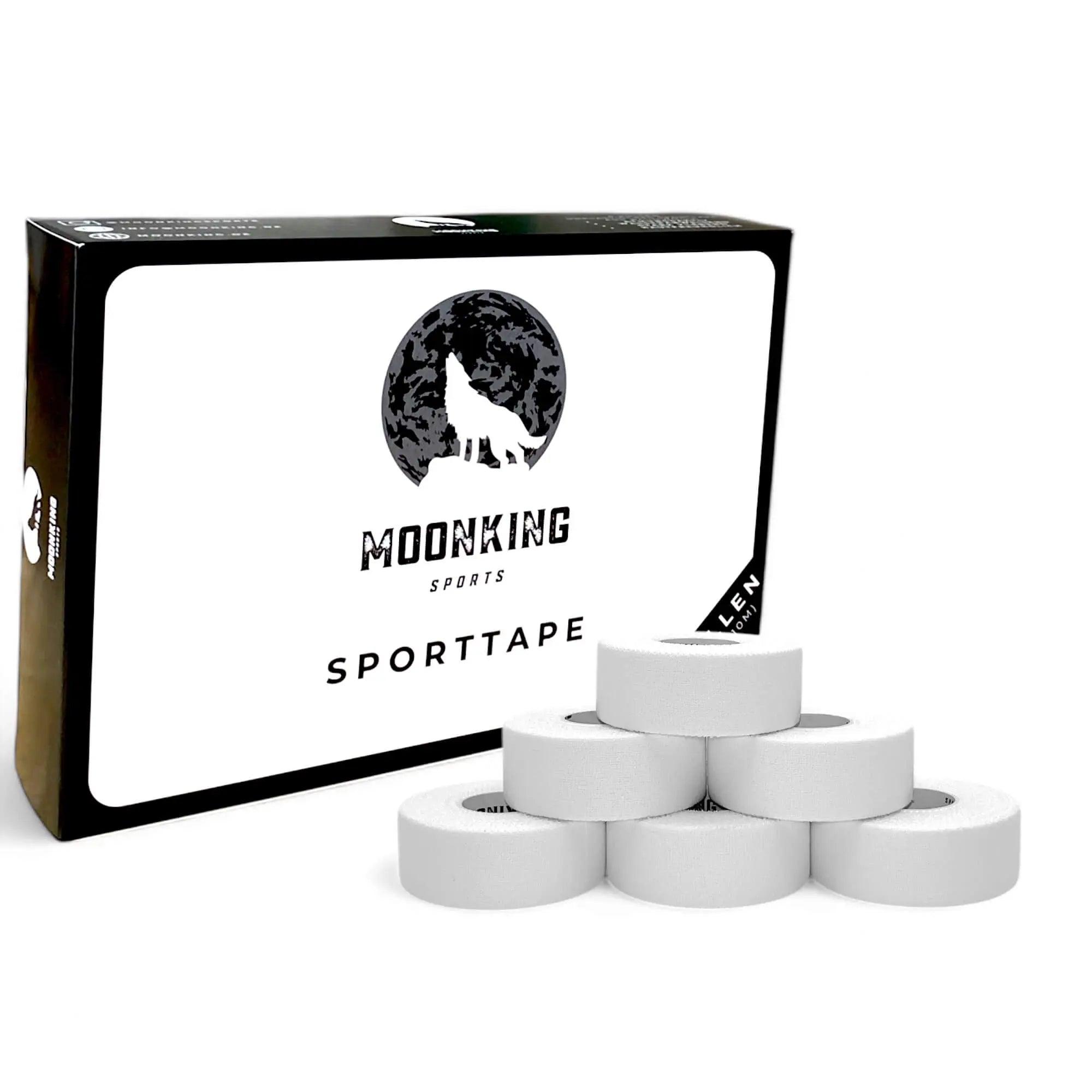




Whether you're into gymnastics, bouldering, volleyball, basketball, weight training, or martial arts, finger injuries are among the most common "minor" problems that can really slow you down during training. That's precisely why so many people search for "finger taping," "taping a torn finger capsule," or "taping a sprained finger." In this guide, we'll show you the best taping techniques (buddy tape, spiral taping, fixation), when each method is appropriate, and which tape you'll need.
Quick guide (30 seconds): For minor sprains or bruises, buddy taping is usually the quickest solution. Spiral taping can also help with joint instability. For more severe pain: immobilize the joint more precisely – and consult a doctor if in doubt.
- Best for: sprains, bruises, capsule/ligament strains, "wobbly feeling" in the joint
- Important: Tape should stabilize, but not constrict (tingling/color change = loosen/remove immediately)
- You will need: Finger tape or sports tape + optional underwrap
Jump to: Buddy Taping · Capsule Tear / Capsule Injury · Sprain · Metacarpophalangeal/Proximal Interphalangeal Joint · Which Products? · FAQ
At MoonKing Sports , we know how crucial the right support is – especially for athletes, active individuals, or anyone who relies on a fully functional hand in everyday life. With targeted taping techniques and the right materials, you can stabilize your joint, reduce pain, and prevent further irritation – without completely immobilizing your finger.

When is finger taping advisable?
Taping fingers is not only a measure taken directly after an injury, but also a sensible preventative measure – especially in sports involving ball contact, grip stress or risk of falling.
- sprain or bruise
- Capsule or ligament strain (e.g. after “twisting an ankle”)
- Overload due to repetitive movements (grip/support)
- Instability following a previous injury
- Protection during training or competition
Typical symptoms that taping can help with
- Swelling and pressure pain
- limited mobility
- Insecurity or a "wobbly feeling" in the joint
- pulling pain during exertion
With the right tape , you stabilize the joint, protect it from further irritation and create good conditions for regeneration.
Why taping is often better than just resting
Many people tend to completely immobilize injured fingers. The problem: lack of movement can lead to stiffness and delay the return to training. Taping allows controlled movement while simultaneously providing protection and support – a good compromise, especially for minor to moderate injuries.
Taping fingers in case of a capsule tear/capsule injury
Many search queries revolve around "taping a torn finger capsule" or "taping a finger capsule injury" . Important: A true capsule tear can be more severe than it feels. If you have significant swelling, noticeable misalignment, or intense pressure pain, consult a doctor.
- Light to medium: Buddy taping + optional spiral taping (stability + movement)
- Stronger/unstable: Joint fixation (more support), adjust training.
Recommendation: For sports and gymnastics , finger tape is pleasantly narrow; for maximum hold, use sports tape . If you have sensitive skin, use underwrap as a base.
Taping a sprained finger: Here's how to do it
The goal in the case of a sprain is to protect against further hyperextension while still allowing sufficient movement. This is most often achieved with buddy taping (quickly) or spiral taping (more precisely targeted).
- Days 1-3: rather stable (buddy + possibly fixation during everyday life/training)
- From day 3–7: controlled movement, tape especially during exertion
Taping the base joint/middle joint of the finger
Search terms like "taping the base of the finger" or "taping the metacarpophalangeal joint" usually mean: The joint feels "loose" or hurts when pressure is applied or gripped. Spiral taping is very helpful in these cases because it guides the joint without completely blocking it.
The best taping techniques
1) Buddy Taping – the fastest & most effective method
Buddy taping involves taping the injured finger to a healthy adjacent finger (e.g., little finger to ring finger). This is quick, effective, and particularly suitable for minor injuries or for prevention.
Advantages:
- easy to implement
- supports natural movement
- reduces stress on the injured joint
Here's how it works:
- Bring fingers into a neutral, slightly bent position.
- A thin strip of tape above the middle finger joints.
- Another stripe below the joints.
- Important: Do not completely cover the joints with tape.
MoonKing Tip: Use finger tape for everyday use/comfort or sports tape for maximum support during training.
2) Spiral taping – targeted support with movement
Spiral taping is ideal if you want to stabilize but retain mobility – e.g. for gymnastics, climbing or martial arts.
- Start with the tape below the finger (hand side).
- Guide it diagonally across the affected joint.
- Repeat the spiral 1-2 times.
- The tape should be snug, but not constricting.
✅ Ideal for: Overuse injuries, prevention, and light training
3) Joint fixation – maximum support for more severe symptoms
If your finger is unstable or you are in the rehabilitation phase, you often need more stability.
- Secure the base joint with a tight tape ring.
- Reinforce the area above and below the middle joint.
- Combine with buddy taping if needed.
MoonKing recommendation: Use non-elastic sports tape for a firm hold and long wearing time.
4) Kinesiology taping – functional support (after the acute phase)
Kinesiology tape is elastic and is particularly suitable after the acute phase when you want to support movements and relieve irritation.
- Apply the tape with a slight pull along the outer edge of the finger.
- Guide it over the joint and fix it on the palm of the hand.
- Add a second strip if needed.
✅ Promotes blood circulation · ✅ Can provide relief · ✅ Skin-friendly

Which products do you really need?
The quick selection:
- Everyday life & comfort: Finger tape
- Maximum support during training: sports tape
- Sensitive skin / heavy sweating: Wear an underwrap underneath.
- Functional support: Kinesiology tape
Here you can find the complete range: MoonKing Tapes & Bandages
How often and for how long should you tape your fingers?
| Type of injury | Tape duration | Application |
| Minor bruising | 3–5 days | especially in sports |
| Capsule/ligament strain | 1–2 weeks | Training & daily life (as needed) |
| Rehabilitation phase | 2–3 weeks | after consulting a doctor |
Important: Change the tape regularly to allow the skin to recover. If itching or redness occurs, take a break or switch to underwrap/kinesiology tape.
Tips for perfect taping
- Clean and dry your hands beforehand (better adhesion)
- No wrinkles in the tape (avoids pressure points)
- Do not wrap too tightly (blood circulation must be maintained)
- Test mobility after taping
When should you see a doctor or physiotherapist?
- significant misalignment or very severe pain
- Numbness/tingling, cold finger, strong color change
- Pain/swelling remains the same or worsens after 5–7 days.
FAQ: Finger taping
How long should fingers be taped in case of a capsule injury?
Often 1–2 weeks of activity – depending on pain and stability. In everyday life, only when necessary, to give the skin a break.
Is it okay to train with taped fingers?
For mild symptoms, often yes – but adjust the intensity of the activity. In cases of instability, severe pain, or an uncertain diagnosis, it's best to consult a doctor.
Which tape for fingers: finger tape or sports tape?
Finger tape is narrow and comfortable. Sports tape provides maximum support (training/competition). For sensitive skin: use an underwrap underneath.
Conclusion: Taping your fingers – small but crucial
Whether it's your little finger, ring finger, or base joint: properly taped, you can gain stability, reduce pain, and train more safely. With the right techniques (buddy taping, spiral taping, fixation) and high-quality tape from our shop, you'll be back to your normal activities quickly.
Discover now: Tape & Bandages · Finger Tape · Underwrap
Note: This article is not a substitute for medical advice. In case of severe pain, persistent swelling, or uncertain diagnosis, we strongly recommend consulting a doctor or physiotherapist.