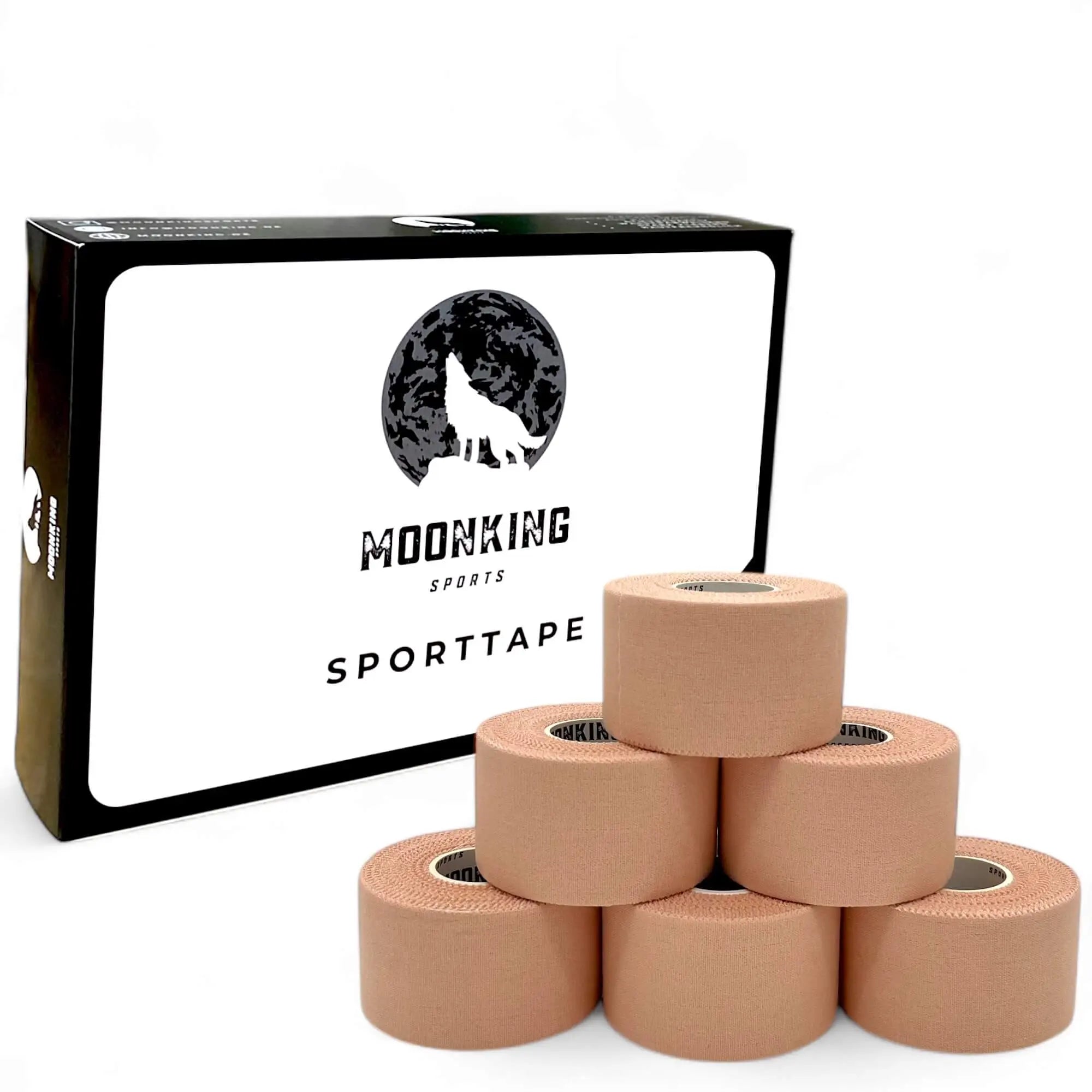




Summary: Kinesiology tape can support muscles and joints, reduce pain, and promote regeneration—provided you apply it correctly. This guide will teach you how to use it step by step (including tension, strip shapes, and common mistakes) and help you find the right kinesiology tape in blue, beige, or pink.
Short answer:
Kinesiology tape is applied to clean, dry skin. The ends (anchors) should always be applied without tension, while the middle section is usually held with slight tension (often around 10–25%), depending on the intended use. Round off the edges, rub the tape firmly after application (heat activates the adhesive), and then avoid contact with water or sweat for 30–60 minutes for optimal adhesion.
Looking for the right tape right away? Here are our options: Blue kinesiology tape Beige kinesiology tape Pink Kinesiology Tape
Table of contents
- What is kinesiology tape?
- When is kinesiology tape useful?
- Preparation: How kinesiology tape really sticks
- Tension strength when using kinesiology tape: How much tension is correct?
- I-, Y- and Fan stripes explained simply
- How to apply kinesiology tape correctly: step-by-step
- Common mistakes (and how to avoid them)
- How long does kinesiology tape last? Showering, sports, sweating
- Contraindications & Warnings
- Conclusion
What is kinesiology tape?
Kinesio tape (also called kinesiology tape) is an elastic, skin-friendly tape that supports the body during movement. without fixing it in place. Unlike traditional sports tape, it preserves mobility – that's precisely why kinesiology tape is used. frequently used in sports medicine, physiotherapy and training.
Important: Kinesiology tape does not replace diagnosis or treatment, but can provide support – especially in cases of overuse. Irritation, muscular problems, or during the regeneration phase.
When is kinesiology tape useful?
Typical uses for kinesiology tape include:
- Pain relief and support: e.g., in cases of muscle strain, tension, or irritation.
- Light joint support: when you want stability but need to maintain mobility
- Regeneration: Support after tough sessions (training/competition)
- Swelling (fan technique): to support lymphatic drainage
If you're looking for a tape that stays in place during training and is comfortable to wear: Beige kinesiology tape It is particularly popular, for example, because it appears more subtle.
Preparation: How kinesiology tape really sticks
The most common reason why kinesiology tape "doesn't work" is not the technique – but the adhesion. These points bring You get significantly more support:
- Clean and dry skin: Sweat, oil, or creams significantly reduce adhesive strength.
- No lotion beforehand: It's best not to apply any lotion for 2-4 hours before taping.
- Trim hair if necessary: Shaving is not mandatory, but very thick hair reduces grip.
- Round off the edges: Rounded corners are significantly less likely to come loose.
- Rub after gluing: Friction/heat activates the adhesive (crucial!).
Pro tip: If you sweat a lot during training, a version with really good grip can make all the difference – e.g. Kinesiology tape blue .
Tension strength when using kinesiology tape: How much tension is correct?
The tension is the most important factor when using kinesiology tape. Too much tension can be uncomfortable and irritate the skin. As a rough guide (depending on technology/region):
- 0% pull: Anchor (start & end) always without tension
- 10–15% pull: light support/everyday use, beginners
- 15–25% pull: common “standard” support during sports/training
- 25–50% pull: rather advanced & very targeted (not a general recommendation)
Rule of thumb: Better too little than too much . If the skin immediately feels tight or itchy, the tension was often too high.
I-, Y- and Fan stripes explained simply
I-stripes (easy & fast)
The I-strip is a classic in kinesiology tape: a strip along a muscle or a painful area. Ideal for beginners and quick applications.
Y-strips (for muscle bellies & near joints)
The Y-strip provides better coverage of areas, especially around muscle groups or joints. It is frequently used, if you want to stabilize without blocking movement.
Fan marks (during swelling/recovery)
Several narrow, fan-shaped strips that are applied over a large area. Frequently used to provide support in cases of swelling. or during regeneration phases.
If you use kinesiology tape frequently, it's worth having several colors on hand – e.g. Pink Kinesiology Tape For better visibility during training (or simply because it looks good).
How to apply kinesiology tape correctly: step-by-step
Step 1: Prepare the skin
- Clean (soap/water), then dry completely.
- Do not apply any cream/oil directly beforehand.
Step 2: Cut the tape to size
- Measure the length appropriately (better a little longer than too short)
- Round off the corners (prevents peeling)
Step 3: Apply tape (anchor → center → end)
- Setting anchor: Starting section without pull
- Apply glue to the center: depending on the target, apply light to moderate tension (usually 10–25%).
- Fix the end: last part again without any movement
Step 4: Activate the adhesive
- Rub vigorously for 30–60 seconds
- Then, no showering/swimming/extreme sweating for 30–60 minutes.
Common mistakes (and how to avoid them)
- Too much tension: often leads to skin irritation → less tension, always loosen ends without tension
- Skin not prepared: Tape comes off early → clean/dry, no cream
- Corners not rounded: Ends curl up → round them off!
- Too early exposure to water/sweat: Adhesive needs time → wait 30–60 minutes
How long does kinesiology tape last? Showering, sports, sweating
Depending on skin type, stress, and application, kinesiology tape often lasts for several days. To make it last longer:
- After showering: Pat the tape dry, do not rub.
- During training: avoid strong rubbing (e.g., from clothing).
- If it comes loose: don't "re-glue" it – replace it instead.
Contraindications & Warnings
- Open wounds: do not apply over broken skin
- Allergies/Intolerance: If a reaction occurs, remove the tape and consult a doctor.
- Severe pain or numbness: Stop use and have the cause checked.
Conclusion
Kinesiology tape is a powerful tool when used correctly: good preparation, appropriate tension, and clean technique. They make all the difference. If you train regularly or tape frequently, it's worth using high-quality kinesiology tape.
Here you'll find our most popular options: Blue kinesiology tape Beige kinesiology tape and Pink kinesiology tape .
Important note: This article is for informational purposes only and does not replace medical advice. If you have any concerns or uncertainties, please consult a doctor or physiotherapist.